

Professional manufacturer of asphalt equipment
sphalt Tank Insulation and Anti-Corrosion Design: How to Reduce Heat Loss and Extend Equipment Service Life
Release Date:
Asphalt tanks are critical storage equipment for road construction, municipal engineering, and asphalt processing industries, responsible for maintaining asphalt at a stable working temperature to ensure its fluidity and usability. Heat loss and corrosi
Asphalt tanks are critical storage equipment for road construction, municipal engineering, and asphalt processing industries, responsible for maintaining asphalt at a stable working temperature to ensure its fluidity and usability. Heat loss and corrosion are two core problems plaguing asphalt tank operation: excessive heat loss increases energy consumption, while corrosion directly shortens equipment service life and even triggers safety hazards such as tank leakage. Scientific insulation and anti-corrosion design can not only cut energy costs by 20%–30% but also extend the asphalt tank’s service life from 8–10 years to 15–20 years. This article systematically elaborates on the key design points of asphalt tank insulation and anti-corrosion, providing practical solutions for equipment optimization.
1. Core Design Principles of Asphalt Tank Insulation: Minimize Heat Loss Efficiently
The insulation design of asphalt tanks focuses on blocking three heat transfer pathways: conduction, convection, and radiation. The design must balance insulation performance, construction feasibility, and cost control.
1.1 Selection of Insulation Materials: Prioritize Thermal Stability and Durability
Asphalt tanks operate at a temperature of 120℃–180℃ for a long time, so insulation materials must have high-temperature resistance, low thermal conductivity, and aging resistance. Common materials and their application characteristics are as follows:
Rock wool: Cost-effective, with a thermal conductivity of 0.038–0.045 W/(m·K), and can withstand temperatures up to 600℃. It is suitable for the insulation of general fixed asphalt tanks, but its water absorption rate is high, so waterproof treatment must be done.
Glass wool: Lightweight and easy to construct, with a thermal conductivity of 0.035–0.042 W/(m·K), but the high-temperature resistance is slightly lower (≤250℃), suitable for low and medium-temperature asphalt tanks.
Polyurethane rigid foam: Excellent insulation performance, with a thermal conductivity as low as 0.022–0.028 W/(m·K), good waterproof and moisture-proof effect, but the maximum operating temperature is ≤120℃, suitable for asphalt tanks with external heating or low-temperature storage.
Ceramic fiber blanket: High-temperature resistance up to 1200℃, low thermal conductivity, suitable for the insulation of high-temperature asphalt tanks and heating pipe sections, but the cost is relatively high.
1.2 Insulation Structure Design: Multi-Layer Protection to Block Heat Transfer
A reasonable insulation structure should adopt a "multi-layer composite" design to achieve synergistic insulation effect:
Inner anti-corrosion layer: Coating anti-corrosion paint on the tank wall first to isolate the tank body from the insulation layer and prevent the insulation layer from absorbing moisture and accelerating tank corrosion.
Main insulation layer: Pave the selected insulation material with a thickness of 80–150mm (adjust according to the working temperature and ambient temperature). For large asphalt tanks, the insulation thickness can be increased to 200mm in cold regions to reduce heat loss in winter.
Moisture-proof layer: Wrap a layer of aluminum foil glass cloth or polyethylene film outside the insulation layer to prevent rainwater and air moisture from penetrating into the insulation material and reducing insulation performance.
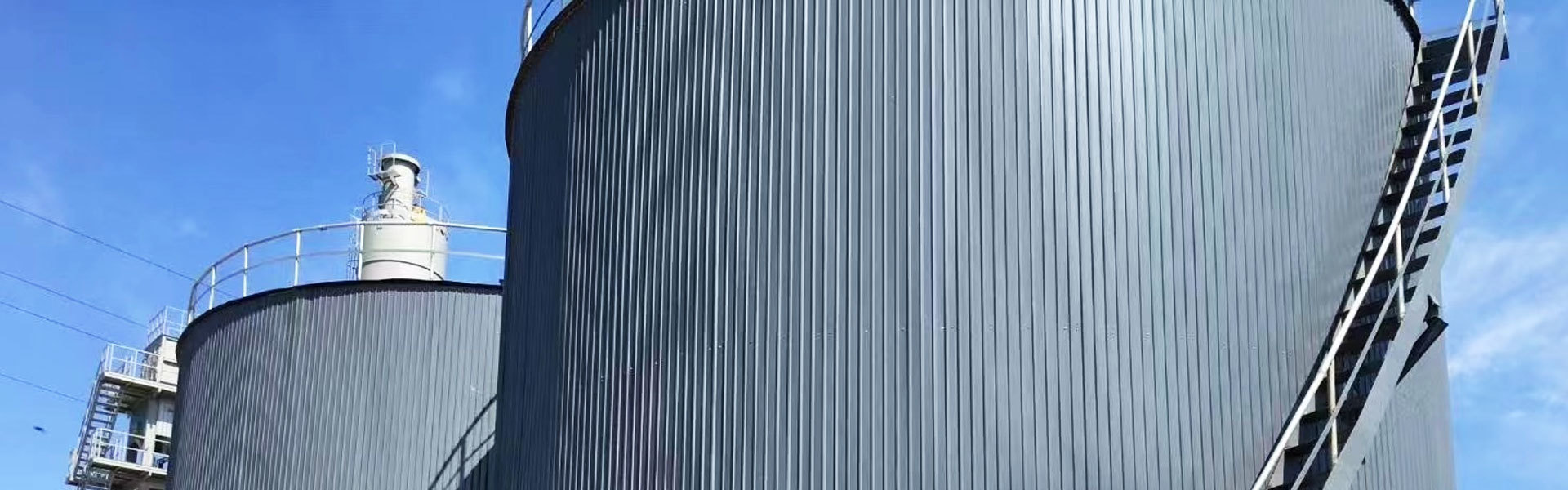
Protective layer: Use color steel plates or stainless steel plates as the outer protective layer to protect the insulation layer from mechanical damage and ultraviolet aging, and improve the overall aesthetics of the equipment.
1.3 Key Parts Insulation Optimization: Avoid Local Heat Loss
The tank top, pipe connections, manholes, and other parts are prone to local heat loss, and targeted optimization is required:
Tank top insulation: Adopt a floating roof or fixed roof with insulation layer design, and seal the joint between the roof and the tank wall with high-temperature resistant sealing strips to prevent hot air convection.
Pipe and valve insulation: Wrap the same insulation material as the tank body on the inlet and outlet pipes, heating pipes, and valves, and use detachable insulation sleeves for valves to facilitate maintenance.
Manhole and flange insulation: Use insulation covers customized according to the size of the manhole and flange, and ensure tight connection to avoid heat leakage at gaps.
2. Anti-Corrosion Design of Asphalt Tanks: Multi-Level Protection to Extend Service Life
Asphalt tanks face dual corrosion threats: internal corrosion from asphalt, water impurities, and acidic components, and external corrosion from rain, humidity, and industrial exhaust gas. Anti-corrosion design needs to start from material selection, coating protection, and structural optimization.
2.1 Material Selection: Improve the Corrosion Resistance of the Tank Body from the Source
Carbon steel with anti-corrosion coating: The most widely used scheme, with Q235B carbon steel as the base material, and internal and external anti-corrosion coatings to improve corrosion resistance, with high cost performance.
Stainless steel: 304 or 316 stainless steel has excellent corrosion resistance, suitable for storing asphalt with high acid content or used in coastal humid areas, but the cost is 3–5 times that of carbon steel.
Glass fiber reinforced plastic (FRP): Lightweight and corrosion-resistant, suitable for small and medium-sized asphalt tanks, but the high-temperature resistance is poor, and it is not suitable for long-term use above 120℃.
2.2 Coating Anti-Corrosion Design: Build a Solid Protective Barrier
Coating is the most economical and effective anti-corrosion method for carbon steel asphalt tanks, and the construction must follow the "surface treatment + primer + topcoat" process:
Surface pretreatment: Before painting, remove rust, oil stains, and oxide skin on the tank wall surface by shot blasting or sandblasting, and the surface cleanliness should reach Sa2.5 level, with a roughness of 30–70μm, to ensure the coating adhesion.
Internal coating selection: The inner wall is in direct contact with asphalt, and high-temperature resistant anti-corrosion coatings should be selected, such as epoxy phenolic resin paint (resistant to 200℃) or polyurea coating (resistant to 180℃), with a dry film thickness of 200–300μm.
External coating selection: The outer wall is mainly resistant to atmospheric corrosion, and can use epoxy zinc-rich primer + polyurethane topcoat, with a dry film thickness of 150–200μm. For coastal areas, add a middle coat to enhance salt spray resistance.
2.3 Structural Anti-Corrosion Optimization: Eliminate Corrosion Dead Zones
Reasonable drainage design: Set a slope of 2%–3% at the bottom of the tank to facilitate the discharge of water accumulated at the bottom of the tank and avoid local corrosion caused by water retention. Install a sewage outlet at the lowest point of the tank bottom for regular cleaning.
Avoid sharp corners and gaps: Optimize the tank body welding structure, use fillet welding instead of butt welding at corners, and polish the welds to be smooth to prevent stress corrosion and corrosion caused by dirt accumulation.
Cathodic protection auxiliary: For large underground or semi-underground asphalt tanks, cathodic protection can be used in combination with coating protection, such as sacrificial anode method (using zinc or magnesium anodes) to slow down the corrosion rate of the tank body.
LATESTS NEWS
sphalt Tank Insulation and Anti-Corrosion Design: How to Reduce Heat Loss and Extend Equipment Service Life
2026-01-09
Asphalt Tank Core Structure Analysis: Design Key Points of Insulation Layer, Heating System and Agitation Device
2025-12-15
Asphalt Tank Selection Guide: Core Decision Factors from Capacity and Material to Heating Method
2025-12-02
Emulsified Asphalt Equipment Selection Guide: How to Match Colloid Mill Types and Production Capacity to Road Construction Needs?
2025-11-24


